
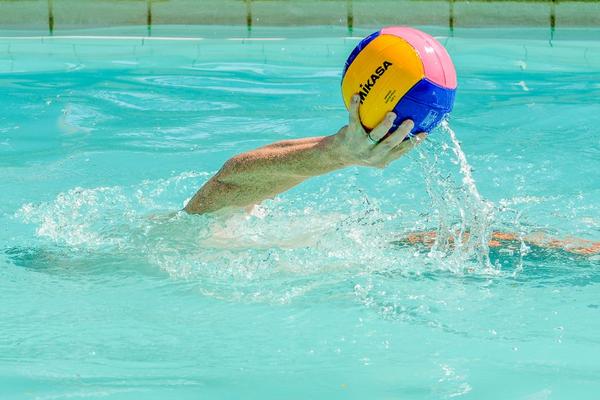
The water polo eggbeater kick looks effortless when an experienced player rises to catch a pass or block a shot. Underwater, the legs work constantly. Each foot sweeps in turn, keeping the body upright and leaving the hands free for the ball.
Mastering this movement improves more than water polo treading. It creates the steady platform needed for passing, shooting and defending. The goal is not frantic kicking; it is reliable lift and control.
How the eggbeater kick works
Unlike a flutter kick, which moves the legs mainly up and down, eggbeater uses alternating outward-sweeping motions. One leg supports the body while the other recovers, producing relatively continuous support. A simultaneous breaststroke kick feels different because both legs work together.
Foot orientation matters as much as speed. A foot angled effectively against the water generates useful force; fast circles with loose, pointed feet often do not.
Position your torso and hips
Float upright in water too deep to stand. Keep your torso tall, shoulders relaxed and hips beneath you. Bend your knees and open the thighs comfortably to the sides, creating space for each lower leg to move.
Light hand sculling can help beginners balance, but reduce it as you improve. In a match, those hands may be catching, passing or blocking.
Use your feet, not just your knees
Flex the ankles so the toes draw toward the shins, then rotate the feet outward for the working sweep. Each leg performs a breaststroke-like action at a different moment. The feet follow curved paths while their changing angles press against the water.
Do not force an extreme hip, knee or ankle position. Comfortable range and coordination matter more than making the widest possible circles.
Find a continuous rhythm
Start slowly: right leg sweeps, then left leg. Blend the movements until the support feels steady. If your shoulders bounce on every kick, improve the timing before increasing speed. Effective vertical swimming requires a stable upper body even while the legs stay busy.
Learn the movement step by step
Rehearse on land
Sit safely on the pool deck or a sturdy bench. Practice flexing and turning each foot, then alternate partial breaststroke-style kicks. Watch for one foot becoming pointed while the other stays flexed.
Practice at the wall
Hold the pool edge, lift your feet clear of the bottom and keep your knees apart. Kick with one leg at a time before alternating. The wall lets you concentrate on the sweep without worrying about balance.
Take away the support
Move into supervised deep water and tread for short periods with minimal hand movement. If your hips sink, reset the foot position rather than automatically kicking faster. Rest when the pattern becomes sloppy.
Four drills that build game-ready control
Quiet shoulders
Maintain eggbeater for 15 to 20 seconds without obvious shoulder bobbing. Rest and repeat. Ask a teammate to observe from poolside. A calm waterline is a better sign of consistent support than splashing feet.
Hands-free balance
Begin with light sculling, then hold your hands just above the surface. Next, raise one arm as though receiving a pass while maintaining the same leg rhythm. This prepares you for water polo passing technique, where the ball-handling action cannot depend on both arms supporting you.
Rise and settle
Tread at a comfortable pace, then produce several stronger, well-directed sweeps to lift your shoulders briefly. Return to a sustainable rhythm instead of trying to hold maximum height. Learn to switch smoothly between ordinary support and a short burst of elevation.
Catch, turn and shoot
Picture a perimeter attacker receiving a pass as a defender approaches. Turn toward the imagined ball, lift the receiving arm and rise briefly without tipping backward. This connects the eggbeater to water polo shooting technique: your legs form the stable base for the throwing arm.
Goalkeepers can adapt the drill by holding an upright position, then lifting both arms toward alternating corners. Combine that movement with sound water polo goalkeeper positioning; a spectacular rise is less useful if it leaves you off balance.
Common mistakes and practical fixes
Pedaling underwater
If your knees pump forward and backward like bicycle pedals, you are missing the outward sweep. Return to single-leg breaststroke practice and feel the foot moving against the water before alternating again.
Closing the knees
Legs held too close together limit the sweep and reduce stability. Open the hips to a comfortable width, but never force painful rotation. Wide legs are helpful only when you can control them.
Keeping the toes pointed
Relaxed, pointed feet may slip through the water. Rehearse ankle flexion and foot rotation slowly. Remember that the foot angle changes during the kick; it should not remain rigid throughout.
Rushing every kick
Very quick, shallow movements can hide poor mechanics. Slow down, restore a deliberate sweep and rebuild tempo gradually. If the shoulders bob, treat that as a cue to reset.
Leaning back and flailing the arms
A tilted torso makes passing and blocking harder. Revisit tall posture at the wall, then practice short hands-free holds. Some sculling is useful, but your arms should not constantly rescue weak leg action.
Measure improvement through control
Check whether your shoulders stay level, whether you can lift an arm without sinking and whether you can rise briefly on command. A coach can observe the knee position and foot action from the deck or underwater where conditions permit.
Choose several short, focused repetitions with recovery rather than one exhausting effort. Fatigue can conceal technical problems. Use appropriate supervision for deep-water practice, and stop if the movement causes joint pain.
Frequently asked questions
Is eggbeater the same as breaststroke kick?
No. The leg mechanics are related, but breaststroke usually moves both legs together. Eggbeater alternates them for more continuous upright support.
Why do I sink when I lift my hands?
Your hands may be providing hidden support, or your feet may not be producing enough lift. Refine the sweep at the wall, then progress from raising one hand to both.
Will faster kicks make me rise higher?
Not necessarily. Better-directed sweeps and well-timed alternation may help more than sheer speed. Establish technique before adding power.
How often should beginners practice?
Use brief skill-focused periods within regular supervised pool sessions. A coach can adjust the workload to your ability. Consistent, controlled repetitions beat kicking until you lose form.
Make the kick useful in a match
Good water polo leg technique is the movement you can trust while tracking an opponent, catching a pass or preparing to block. Develop the foot sweep, build an even rhythm and practice switching from steady support to brief elevation. As your legs become dependable, the decisions and skills above the surface get easier.