
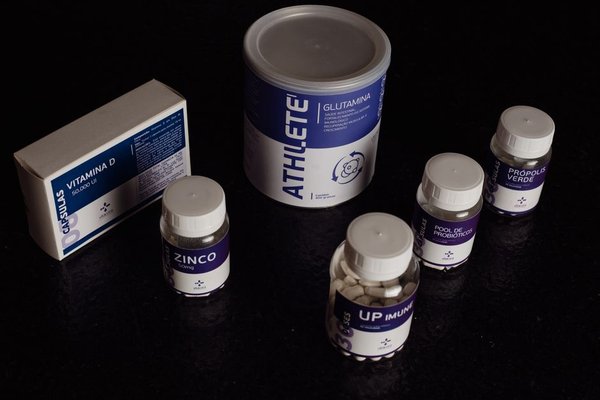
An athlete can read every ingredient on a supplement label and still miss the biggest risk: something that should not be there. A protein powder or pre-workout may contain an undeclared prohibited substance because of contamination, poor manufacturing controls or deliberate adulteration. That is why third-party tested supplements for athletes matter. Independent checks add evidence that a product has been screened, rather than asking the buyer to trust the packaging alone.
Certification is not a promise of zero risk, though. The useful question is what was tested, by whom, and whether the exact product in your hand is covered.
Why an ordinary supplement label is not enough
Ingredient lists help athletes understand intended contents, serving sizes and possible interactions. They do not independently establish what is present in the finished product. Even a familiar brand can manufacture different products on different lines, creating opportunities for cross-contact.
For athletes subject to anti-doping rules, the stakes go beyond an ineffective purchase. Under the principle of strict liability, an athlete can be held responsible for a prohibited substance found in their sample, even when it was consumed unintentionally. UK Anti-Doping and the U.S. Anti-Doping Agency both stress that supplement use carries unavoidable risk.
A sensible starting point is to learn how to read supplement labels carefully, while recognising that label reading cannot replace independent verification.
What does third-party certification actually mean?
Third-party supplement testing means a laboratory or organisation independent of the manufacturer evaluates a product. But a single laboratory report and an ongoing certification programme are not interchangeable.
A one-off test is only a snapshot
A manufacturer might commission a test on one sample and advertise that a product is “lab tested.” That result may say little about later production batches, the range of substances screened, or conditions inside the factory. A certificate of analysis can be informative, but its value depends on the sample, methods and laboratory behind it.
Sport-specific programmes look beyond one sample
Established certification systems assess defined standards and maintain product listings. NSF Certified for Sport includes checks relevant to substances prohibited in sport, while Informed Sport requires prohibited-substance screening of every certified product batch before release, alongside manufacturing reviews and additional monitoring.
These are examples of certified sports supplements programmes, not blanket endorsements of every product sold by a participating brand. A company’s certified protein powder does not automatically make its pre-workout certified too.
What banned substance testing can and cannot verify
Properly conducted testing can provide evidence that the sampled product did not contain substances on the laboratory’s target screening panel above its detection thresholds. Broader certification can also examine manufacturing practices and label-related quality requirements, depending on the scheme.
It cannot demonstrate that every conceivable banned substance is absent. Testing methods have limits, new compounds emerge, and a result from one batch cannot automatically be applied to another. Nor does a certification mark prove that a supplement works, is necessary for your training, or is appropriate for your health.
That distinction matters with products promising dramatic gains. Independent supplement testing reduces a specific category of uncertainty; it does not turn exaggerated marketing claims into scientific evidence.
How to check a product before buying it
Identify the exact certification programme
Look for a recognisable sport-specific mark, such as NSF Certified for Sport or Informed Sport, rather than generic phrases like “quality tested.” Do not assume that a claim of FDA approval, WADA approval or USADA approval is genuine. USADA does not approve dietary supplements.
Search the certifier’s own directory
Open the official NSF Certified for Sport product search or Informed Sport database yourself. Match the manufacturer, full product name, formulation and flavour where relevant. The NSF directory supports searches that include lot numbers; Informed Sport publishes tested batches. A logo on a retailer’s image is not a substitute for a current listing.
Match the batch and keep your records
Inspect the lot or batch code on the container and compare it with the certifier’s available information. Where a programme provides batch-level records, check the actual batch. Retain the receipt, packaging photograph, lot number and a dated record of your verification. Documentation cannot guarantee protection from an anti-doping violation, but it helps establish the steps you took.
A race-week example: same brand, different decision
Imagine a competitive cyclist replacing a finished tub of recovery powder three days before an event. The familiar product appears on the brand’s website with an Informed Sport logo, but the newly delivered tub is a different flavour and batch. Rather than assuming the old tub’s status applies, the cyclist checks the certifier’s live listing for that exact variant and batch.
If the listing cannot be confirmed, the lower-risk choice is not to experiment before racing. The cyclist can rely on familiar food and drink while asking the manufacturer or certifier for clarification. This is the practical difference between treating a certification logo as advertising and treating certification as a verification process.
Certification belongs in a larger safety routine
Before using a supplement, ask whether there is a demonstrated need. A food-first approach, an appropriate training plan and adequate recovery often deserve attention before another product is added. A qualified sports dietitian can help evaluate the evidence for a specific supplement, including dosage, interactions and possible medical concerns.
If supplementation is justified, choose the simplest suitable product, check every new purchase, and avoid stacking several unfamiliar formulas. Keep up with the prohibited list and the rules of your sport, especially when travelling or competing internationally. A useful companion topic is common supplement label red flags, including proprietary blends and unusually aggressive performance claims.
Certification does not remove personal responsibility, but it gives athletes a clearer basis for deciding whether an otherwise necessary product is worth the remaining risk.
Frequently asked questions
Are third-party tested supplements completely safe for athletes?
No. Independent testing and robust certification can lower the risk of undeclared prohibited substances, but neither can eliminate every contamination, health or anti-doping concern. Athletes remain responsible for what they consume.
Is “third-party tested” the same as “Certified for Sport”?
Not necessarily. A testing claim may refer to one sample and one laboratory analysis. NSF Certified for Sport is a defined certification programme with broader requirements. Check the exact claim and verify it directly with the certifier.
Can I trust a certification logo on an online listing?
Use the logo as a starting clue, not final proof. Confirm the exact product, variant and relevant lot or batch in the programme’s official database before purchase or use.
Does testing guarantee I will not fail a drug test?
No. No certification programme screens for every possible prohibited substance or guarantees a negative anti-doping result. Testing is a risk-reduction tool, not an exemption from strict liability.
The practical takeaway
For competitive athletes, the strongest habit is not simply choosing a tub with an impressive seal. It is confirming that a credible sport-specific programme covers the exact product and, where applicable, the batch being used. Combine that check with thoughtful label reading, advice from a qualified professional and a genuine reason to supplement. Those habits make athlete supplement safety a repeatable decision, rather than a leap of faith.