
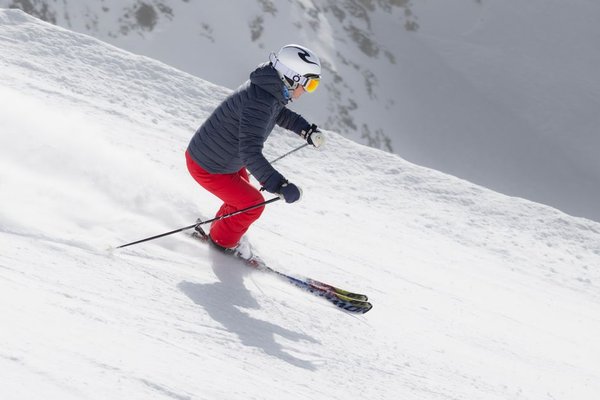
A ski helmet should feel secure before you even fasten its buckle. It needs to sit level, cover your forehead and move with your head rather than sliding around it. But secure does not mean painfully tight. Pressure at your temples, a helmet that tilts backward, or goggles pushed onto your nose can all reveal a poor fit. This ski helmet fit guide explains the checks to make when buying, renting or replacing your protective gear.
How Should a Ski Helmet Fit?
A correctly fitted helmet feels snug and even around your head, without noticeable gaps between the padding and your scalp. It should not wobble when you turn, create sharp pressure points or obstruct your vision. Ear pads, when included, should cover your ears comfortably without folding or painfully squeezing them.
Try this helmet fit check: put on the helmet, adjust its fit system and shake your head gently from side to side. The shell should follow your movements instead of sliding independently. Then fasten the chin strap and test for rocking from front to back. A tighter strap cannot fix a helmet that is fundamentally oversized.
Start With Accurate Ski Helmet Sizing
Wrap a flexible measuring tape around the widest part of your head, above your ears and about 2.5 cm (one inch) above your eyebrows. Keep it level without pulling it tight. Compare the measurement in centimetres against the manufacturer’s size chart, because size labels and ranges differ between brands.
A head measuring 57 cm, for example, might fall into a medium in one range and overlap two sizes in another. Try both when possible. Head shape, internal padding and the adjustment mechanism matter just as much as the number. Do not choose an oversized helmet simply to accommodate a bulky hat.
Use the Adjustment Dial Properly
Loosen the rear dial before putting the helmet on, seat it level, then tighten until contact is secure but comfortable. Some helmets also have interchangeable pads or height adjustment. Follow the maker’s directions and never force a poor-fitting shell to work by overtightening one area.
A thick beanie or hood beneath the helmet can alter its fit. Choose only thin liners approved or permitted by the manufacturer, and repeat the fit check with the layer you actually plan to wear.
Check Forehead Coverage and Ear Comfort
The helmet’s front edge should generally sit about one inch above your eyebrows, covering your forehead without intruding into your field of vision. If a large strip of forehead is exposed, the shell may be tipped too far back or poorly sized. If the front pushes your goggles down, it may sit too low or be incompatible with those goggles.
Check the back edge while looking upward, as you would approaching a chairlift. It should not dig into your neck. Ear pads should feel gently supportive, not painfully tight, and you should still be able to hear your surroundings.
Fasten the Chin Strap Correctly
The buckle should close securely, with the strap positioned centrally beneath your chin. Adjust it until snug, leaving roughly enough room for one or two fingers, subject to the manufacturer’s instructions. Open your mouth wide as if yawning: the helmet should draw down slightly rather than move freely.
Keep the strap fastened while skiing. If it is loose, the helmet may shift or come off during a fall. If it pinches or restricts comfortable movement, readjust it instead of accepting discomfort.
Prevent a Goggles Helmet Gap
A goggles helmet gap is the exposed strip of skin between the top of the goggle frame and the helmet. Ideally the two meet neatly without an obvious gap, but they should not press against each other so hard that the goggles slide down your nose or distort their face seal.
Bring your goggles when trying on a helmet. Look forward, turn your head and glance downward to check visibility, comfort and stability. Position the goggle strap as designed, using the rear retaining clip where provided. Two comfortable items of ski safety gear are not necessarily compatible as a pair.
Matching brands is optional; a comfortable, stable pairing matters more. A choosing ski goggles guide is a useful next read if you are also comparing frames and lenses.
The Five-Minute Rental-Shop Test
Imagine collecting ski rentals before your first lesson. The attendant offers a medium helmet that feels fine for ten seconds. Instead of accepting it immediately, check forehead coverage, tighten the dial, buckle the strap, shake your head and wear your actual goggles. Keep the helmet on for several minutes while discussing your skis.
If pressure develops above one ear, request another size or model. If the helmet slides backward when you raise the goggles, reassess the fit. This small trial often reveals problems that a size sticker cannot. With children, ask directly about discomfort and never buy a large helmet for them to grow into.
When to Replace or Change a Helmet
Try another helmet when adjustments cannot eliminate wobbling, concentrated pressure, exposed forehead or interference with your goggles. A broken buckle, compromised retention system or damaged shell also needs attention. Follow the manufacturer’s instructions on replacement after an impact; protective material can be damaged even when the exterior appears normal.
Check the manufacturer’s recommended service life, too. If a used helmet has an unknown history, you cannot confidently judge what impacts it has experienced. Reliable fit and known condition are more valuable than a bargain.
Remember What Helmet Standards Mean
Choose a snow-sports helmet meeting an appropriate standard, such as ASTM F2040 in the United States or EN 1077 for alpine skiing and snowboarding in Europe. Check the product label and documentation rather than assuming any hard-shell sports helmet will do. Certification does not make a helmet concussion-proof or eliminate every injury risk.
Good fit is one part of safer skiing, alongside controlling your speed and respecting slope conditions. Beginner ski safety tips and what to wear skiing are useful companion topics when checking the rest of your equipment.
Frequently Asked Questions
Should a ski helmet feel tight?
It should feel uniformly snug, not painful. If you must tighten the dial excessively to stop the helmet moving, try a different size or shape.
How much forehead should show?
The front edge generally sits around one inch above your eyebrows, protecting your forehead without blocking your view or pushing down your goggles.
Can I wear a beanie under my helmet?
Bulky hats can change the fit. Only use headwear compatible with the manufacturer’s guidance and check the helmet again while wearing it.
How do I check a child’s helmet?
Measure their head, follow the specific sizing chart and check stability, chin strap, forehead coverage and goggles together. Recheck the fit as they grow.
A Simple Final Check Before Every Run
Before taking the lift, confirm five things: the shell sits level, pressure feels even, the chin strap is fastened, the helmet moves with your head, and the goggles fit without discomfort. If something slips, pinches or blocks your view, fix it before skiing. The best helmet is not merely the one with the right size printed inside; it is the one that fits your head and works with your other gear.