
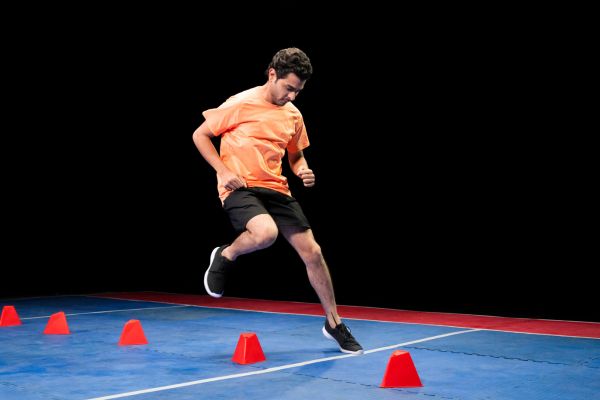
Athletic performance is often described through physical traits. Speed, strength, endurance, agility, and coordination usually dominate conversations about sports performance. Yet anyone who has competed seriously understands that physical preparation alone rarely guarantees success. Two athletes may have similar talent levels, but one consistently performs better under pressure, recovers faster from mistakes, or stays composed during critical moments.
Sports place enormous demands on the brain. Athletes process information constantly — reacting to movement, anticipating decisions, managing emotions, remembering tactics, controlling focus, and adjusting under pressure in real time. Whether it’s a basketball player reading defensive rotations, a tennis player anticipating shot placement, or a goalkeeper reacting within fractions of a second, mental sharpness shapes performance just as much as physical ability.
That’s why cognitive strategies for athletes have become increasingly important across nearly every level of sport. Mental preparation is no longer treated as something separate from performance. It’s part of performance itself.
Why Mental Sharpness Matters in Competition
Physical fatigue is easy to recognize because it feels obvious. Legs get heavy, breathing becomes harder, and reaction speed slows. Mental fatigue is more subtle. Concentration drifts. Decision-making becomes slower. Frustration builds more quickly. Small mistakes begin multiplying.
Athletes compete in environments filled with pressure, distractions, emotional swings, and unpredictability. The brain constantly filters information while deciding what deserves attention and what should be ignored.
That’s exhausting over time.
Cognitive strategies help athletes maintain clarity during stressful situations. They improve focus, emotional regulation, decision-making, and confidence under pressure. In many cases, mental sharpness becomes most visible late in games or competitions when fatigue affects everyone physically.
The athletes who remain composed in those moments often appear calmer from the outside, but usually that calmness comes from preparation rather than personality alone.
Visualization Helps Prepare the Brain
Visualization has become one of the most widely used cognitive strategies for athletes because the brain responds strongly to imagined experiences. Many athletes mentally rehearse movements, situations, or performances before they happen physically.
This process is not simply daydreaming about success. Effective visualization involves detailed mental rehearsal. Athletes picture movement patterns, timing, reactions, emotional control, and environmental conditions as realistically as possible.
A basketball player may mentally rehearse free throws during a noisy game environment. A sprinter might visualize the start sequence repeatedly before competition. A golfer may picture shot trajectories and course conditions before stepping onto the course.
Mental rehearsal helps strengthen familiarity. The brain becomes more prepared to respond calmly because situations feel less unfamiliar once they occur physically.
Interestingly, many experienced athletes visualize handling mistakes as well, not only perfect outcomes. That approach helps reduce panic when things don’t go exactly as planned.
Self-Talk Shapes Performance More Than People Realize
Athletes speak to themselves constantly during competition, even if those conversations happen silently. Sometimes the internal dialogue helps performance. Other times it quietly damages confidence and focus.
Negative self-talk often appears automatically after mistakes. An athlete misses a shot, makes a poor pass, or loses concentration briefly, and suddenly frustration dominates attention instead of the next play.
Cognitive strategies for athletes frequently involve learning how to manage internal dialogue more intentionally. That doesn’t mean repeating unrealistic motivational phrases constantly. Instead, athletes work on developing balanced, focused communication with themselves under pressure.
Simple phrases often work best. “Stay composed.” “Next play.” “Trust the movement.” “Breathe.” Short cues help redirect attention toward action instead of emotional spiraling.
Athletes who recover quickly from mistakes usually manage self-talk effectively. They avoid turning one error into several by regaining focus faster.
Focus Is a Skill That Requires Training
Modern athletes compete in environments filled with distraction. Crowds, expectations, social media, criticism, pressure from coaches, and internal anxiety all compete for attention during performance.
Focus is not something athletes either naturally possess or lack permanently. Like physical conditioning, concentration improves through repeated practice.
Some athletes use breathing routines before competition to calm mental noise. Others develop pre-performance rituals that help narrow attention toward controllable actions. Certain athletes intentionally focus on sensory details — breathing patterns, foot placement, or movement rhythm — to stay present during stressful moments.
Cognitive strategies for athletes often revolve around controlling attention rather than eliminating nerves entirely. Most competitors still feel pressure before important events. The difference lies in where their attention goes once competition begins.
Elite athletes are rarely emotionless. They simply manage focus more effectively under emotional conditions.
Decision-Making Under Pressure Separates Great Athletes
Sports happen quickly. Athletes often make decisions within fractions of a second while fatigued, stressed, or physically challenged.
Good decision-making relies heavily on pattern recognition. Experienced athletes process situations faster because they’ve seen similar moments repeatedly over time. Their brains recognize cues and anticipate possibilities before conscious thought fully catches up.
That’s one reason game experience matters so much in sports development.
Still, cognitive preparation can improve decision-making too. Film study, tactical review, situational training, and mental rehearsal all strengthen the brain’s ability to recognize patterns during competition.
Athletes who stay mentally calm generally make better decisions because stress narrows thinking. Panic creates rushed reactions. Composure creates clearer perception.
The game often feels slower to athletes who remain mentally controlled under pressure.
Breathing Techniques Support Emotional Control
Breathing seems automatic until pressure changes it. During stressful moments, athletes often breathe more shallowly and rapidly without realizing it. That physical response increases tension, heart rate, and mental urgency.
Controlled breathing helps regulate the nervous system during competition. Some athletes use slow exhalations before critical moments to reduce tension. Others develop breathing rhythms tied to movement or pre-performance routines.
These techniques are not magical solutions, but they help create physiological stability during emotionally intense situations.
A tennis player may reset between points with controlled breathing. A basketball player may use breath control before free throws. Combat sport athletes often rely heavily on breathing patterns to maintain composure during physically exhausting exchanges.
The body and mind constantly influence each other. Breathing becomes one of the simplest ways to interrupt escalating stress responses.
Routines Create Stability During Uncertainty
Competition environments are unpredictable. Results fluctuate. Momentum changes suddenly. Athletes cannot control everything around them.
Routines help create consistency within that unpredictability.
Many athletes follow structured habits before games, practices, or competitions. Warmup sequences, stretching patterns, visualization periods, music choices, or timing rituals all provide familiarity. These routines reduce unnecessary mental energy because the brain recognizes stable patterns.
Routines also help athletes transition into competitive focus more smoothly.
Importantly, effective routines are usually practical rather than superstitious. The goal is emotional regulation and concentration, not magical thinking.
Still, humans naturally seek familiarity during stressful situations, and athletes are no different.
Emotional Recovery After Mistakes Matters
Mistakes are unavoidable in sports. Even elite athletes make errors constantly. What separates strong competitors is often how quickly they recover emotionally afterward.
Some athletes remain mentally trapped in previous mistakes for several minutes or longer. That lingering frustration affects future decisions and performance quality. Others reset quickly and stay engaged with the present moment.
Cognitive strategies for athletes frequently involve learning emotional recovery skills. Reflection matters after competition, but during performance, athletes need the ability to move forward quickly.
This becomes especially important in fast-paced sports where hesitation creates additional mistakes.
Emotional control does not mean suppressing feelings completely. Competitive athletes naturally feel frustration, excitement, disappointment, or pressure. The key is preventing emotions from fully controlling attention and decision-making.
Confidence Is Built Through Preparation
Confidence in sports is often misunderstood. Many people think confident athletes simply believe in themselves naturally. In reality, lasting confidence usually grows from preparation and repeated experience.
Athletes trust themselves more when they’ve trained consistently, handled adversity previously, and developed routines that support performance under pressure.
Mental preparation contributes heavily to that process. Visualization, focus training, breathing control, tactical understanding, and emotional regulation all strengthen competitive confidence gradually.
Confidence becomes more stable when it depends less on immediate results and more on preparation habits.
Athletes who rely entirely on perfect performance for confidence often struggle emotionally when setbacks occur.
Mental Recovery Is Just as Important as Physical Recovery
Athletes spend enormous energy managing competition mentally. Travel, pressure, performance expectations, criticism, and constant evaluation create psychological fatigue over time.
Mental recovery matters alongside physical recovery, especially during long seasons.
Some athletes recover mentally through quiet time away from competition. Others rely on hobbies, social connection, journaling, meditation, or simply stepping away from constant performance thinking temporarily.
Without recovery, mental sharpness declines gradually. Concentration becomes harder. Motivation drops. Emotional reactions intensify.
The healthiest athletes usually learn that constant intensity is not sustainable forever.
Conclusion
Cognitive strategies for athletes have become essential because sports demand far more than physical preparation alone. Focus, emotional control, decision-making, confidence, and mental recovery all shape athletic performance in meaningful ways.
Visualization, self-talk management, breathing techniques, routines, emotional regulation, and concentration training help athletes stay mentally sharp during stressful situations. These strategies do not eliminate pressure or mistakes entirely, but they improve how athletes respond when challenges inevitably appear.
The strongest competitors are rarely the ones who never feel nervous or frustrated. More often, they are the athletes who learned how to manage those emotions while continuing to perform effectively.
Physical training may prepare the body for competition, but cognitive preparation helps athletes stay composed, adaptable, and mentally resilient when performance matters most.